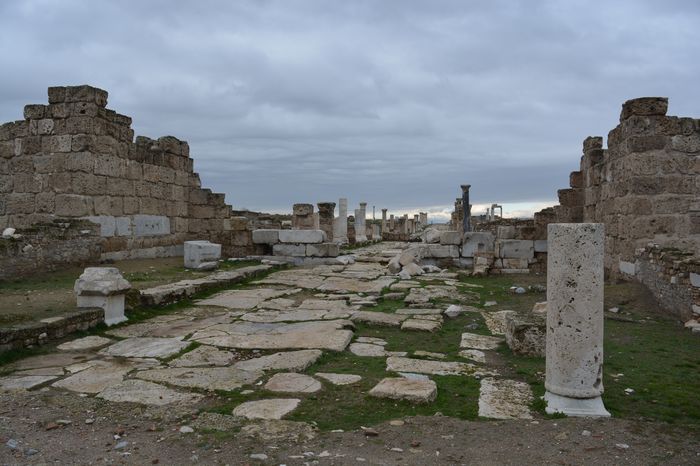
The main hall of the synagogue in Sardis was very large. It is believed that it could hold nearly one thousand people. This shows how large and active the Jewish community was in the city. The hall was the central place for prayer, teaching, and community gatherings.
At the entrance of the hall, there were two shrines with triangular pediments, one on each side. These small shrine-like structures were probably used to keep the scrolls of the Torah. The Torah scrolls were the most sacred objects in the synagogue, and they were treated with great respect and care The Church of St John in Philadelphia.
At the opposite end of the hall, there were circular benches. These seats were likely reserved for the “elders” of the community. The elders were important leaders who helped guide religious and social life. Their special seating area shows the organized structure of the Jewish community in Sardis.
The Unique Marble Table
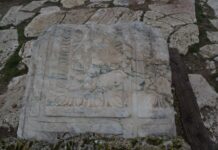
One of the most interesting features of the synagogue is the large marble table that still stands in the hall. This table is unique because no similar example has been found in any other ancient synagogue. It may have been used to hold the Torah scroll during public readings.
The table was made from reused materials. Its legs were decorated with Roman eagles holding thunderbolts, symbols that were common in Roman art. This shows that materials from earlier Roman buildings were reused in the synagogue. On both sides of the table stood pairs of marble lions. These lions were also reused and originally came from the Lydian period, which was much earlier. Today, the original eagles and lions have been removed and are displayed in the Manisa Archaeological Museum for protection.
Decoration of the Hall
The floor of the main hall was covered with beautiful mosaics. In front of the apse, there was a large arched mosaic panel. This panel included an urn, similar to the one in the forecourt, two peacocks, and a vine scroll design. These images were decorative but also carried symbolic meaning. The vine scroll may have symbolized life and blessing, while the peacocks were often symbols of immortality in ancient art Private Tour Istanbul.
The walls of the hall were covered with colored marble panels. This type of decoration, known as marble revetment, gave the interior a rich and elegant appearance. The upper parts of the walls were probably decorated with paintings and glass mosaics, although only small traces remain today.
The roof of the synagogue was supported by strong piers along both sides of the hall. These supports helped carry the heavy structure above.
The Four Central Pillars
In the center of the hall stood four pillars. These pillars were added later, after the original construction of the synagogue. A mosaic inscription found near them tells us that they were donated by a man named Samoe, who is described as a priest and “sophodidaskolos,” meaning a teacher of wisdom. This title suggests that he was an important religious teacher or rabbi in the community.
The inscription likely marks the place from which Samoe taught the people. The four pillars probably supported a canopy over the mosaic floor beneath them. This special area may have served as a teaching space or a place of honor within the synagogue.
A Living Religious Center
The synagogue of Sardis was not only large but also richly decorated and carefully planned. Its size, beauty, and inscriptions show that the Jewish community of Sardis was strong, respected, and well organized. The remains of the building continue to give us valuable information about Jewish religious life in ancient Anatolia.