Ancient Philadelphia, known today as Alaşehir, was founded by Attalos II Philadelphos, the king of Pergamum, who ruled between 159 and 138 BCE. The city was built in an important and strategic location. It stood on the banks of the Cogamus River, today called Alaşehir Çayı, and on the lower slopes of Mount Tmolus. This position allowed the city to control the main roads that met in this area.
Long before the city was founded, this route was already important. In 481 BCE, the Persian ruler Xerxes I passed through this region on his way to Sardis and later to Greece. This shows that the area had military and trade importance even before the Hellenistic period Private Tours Istanbul.
The Purpose of the City
The main goal of Attalos II in founding Philadelphia was probably political and cultural. He wanted to create a gateway city between Lydia and Phrygia. By building a Greek city in this region, he hoped to spread Greek culture and language among the local people, who were said to speak their own Phrygian tongue.
The name “Philadelphia” means “loving one’s brother” in Greek. Attalos II received this name because of his strong loyalty to his older brother, Eumenes II. His loyalty became famous, and the city was named in honor of this brotherly love. Attalos II also founded a port city on the Pamphylian coast and named it Attalia, which is known today as Antalya.
When his nephew, Attalos III, became king, the situation changed. Attalos III was known as a weak and unusual ruler. In 133 BCE, he left the entire Kingdom of Pergamum to Rome in his will. As a result, Philadelphia became part of Roman territory. Later, it continued as part of the Byzantine Empire.
A City of Wine and Prosperity
The region around Philadelphia is still known today for growing some of the best grapes in Turkey. In ancient times, the city was famous for its wine production. The god of wine was worshipped here under both his Greek name, Dionysus, and his Roman name, Bacchus. This shows the strong cultural influence of both Greek and Roman traditions The Main Assembly Hall of the Synagogue.
During the Roman period, the city became very prosperous. Because of its culture, temples, and learning, it was called “Little Athens.” This title suggests that it was an important center of art and education.
Earthquake and Reconstruction
In the year 17 CE, Philadelphia suffered a terrible earthquake. The destruction was great, but the Roman emperor Tiberius helped rebuild the city. In honor of him, the city was renamed Neo-Caesarea for a time. This shows the close relationship between the city and the Roman Empire.
City Walls and Later History
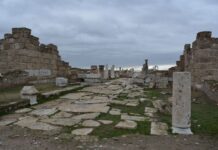
Unlike some other cities in the region, Philadelphia did not have strong natural defenses such as high cliffs or rivers. Because of this, city walls were built to protect it from attacks, especially during the period of Turkish raids in the medieval era. Part of these walls can still be seen today on the north side of the city.
In 1391, the city was finally captured by the Turks. After this date, it became part of the Ottoman lands.
Ancient Philadelphia was an important city founded for political and cultural reasons. Its strategic location, rich vineyards, and strong Greek and Roman traditions made it a prosperous and respected center. Even today, the remains of its walls and historical monuments remind us of its long and interesting history.